

Academic integrity

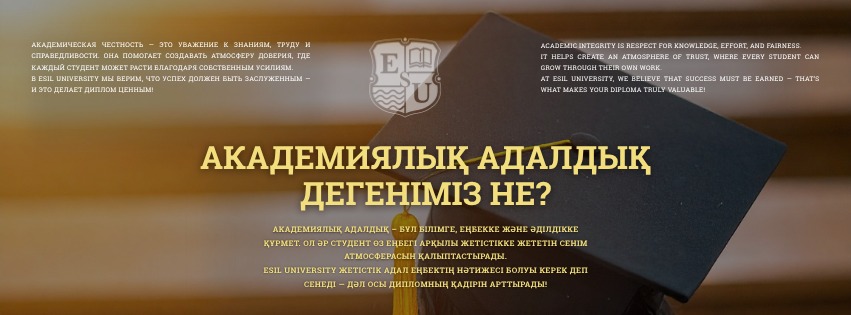
Academic integrity is the set of values and principles that defines standards of conduct for students and staff in teaching, learning, written work and all forms of assessment (EsU Academic Integrity Rules, П EsU 14-15).

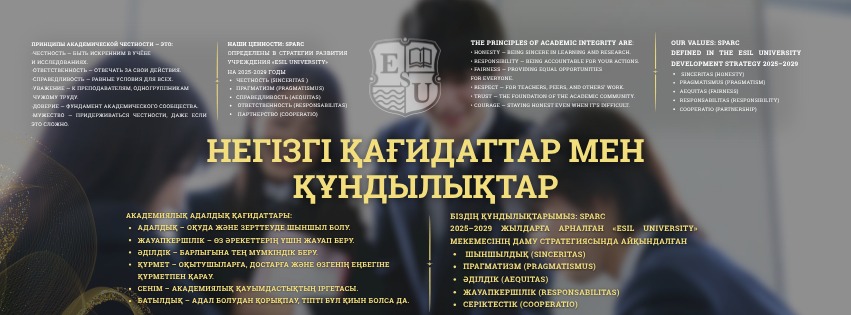
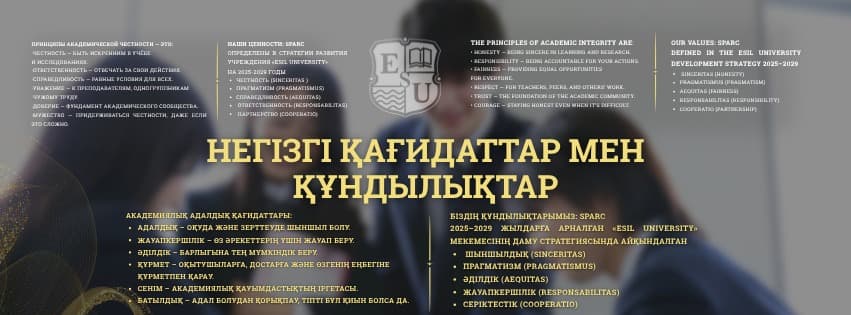
Principles of academic integrity

HonestyCompleting all academic assignments and research without plagiarism, cheating or falsification.
FairnessEqual and objective treatment of every participant in the educational process.
ResponsibilityPersonal accountability for the quality and results of one’s study, research and professional work.
RespectRecognition of others’ intellectual rights, correct use of sources and respect for copyright.

Staff duties

Duties of faculty and staff under the Academic Integrity Rules (П EsU 14-15, cl. 7.2).

  • Ensure objective, transparent, fair and non-discriminatory assessment; allow no favouritism, bias or pressure on students.
  • Explain in advance the requirements for assessed work and the limits on collaboration, sources, digital tools and artificial intelligence.
  • Immediately report identified breaches of academic integrity to the university leadership, the dean’s office or the Committee.

Student duties

Student duties under the Academic Integrity Rules (П EsU 14-15, cl. 6.2).

  • Complete all assessed work independently, using reliable and trustworthy sources.
  • Cite and format borrowed ideas, texts, data, images, tables and program code correctly.
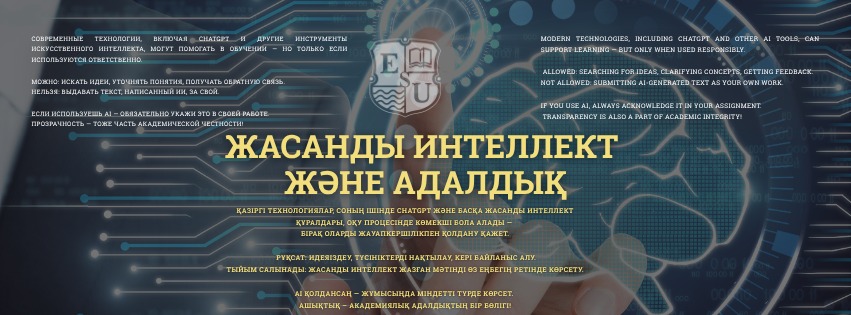
  • Disclose the use of artificial intelligence and digital tools whenever the assignment, the course, the supervisor or the University requires it.

Plagiarism check

Requirements for originality of work and for the use of AI under the Anti-Plagiarism Regulation (П EsU 13-03, eleventh edition).

  • The Anti-Plagiarism Regulation sets a minimum text originality and a maximum share of AI content. The values differ by type of work and for particular study programmes — those in force are listed in clause 5.11 of the Regulation.
  • The share is shown by a separate “AI content” metric in the checking system’s report. The system is an aid: the reviewer judges whether the borrowings are correct and who authored the text (Annex 2).
  • Whatever the share, AI use is cited in the reference list as “AI name: AI model: link to the resource, date accessed” (cl. 4.5). Undisclosed AI use is itself a violation (Rules, cl. 5.2).
  • Improper borrowing with signs of plagiarism, or deliberate distortion of the text, means the student is not admitted to the defence in the current academic year (П EsU 13-03, cl. 5.11.2).
  • A similarity percentage alone is not sufficient grounds for a finding: a substantive review of the work, its sources and the student’s explanation is required (П EsU 14-15, cl. 8.6).

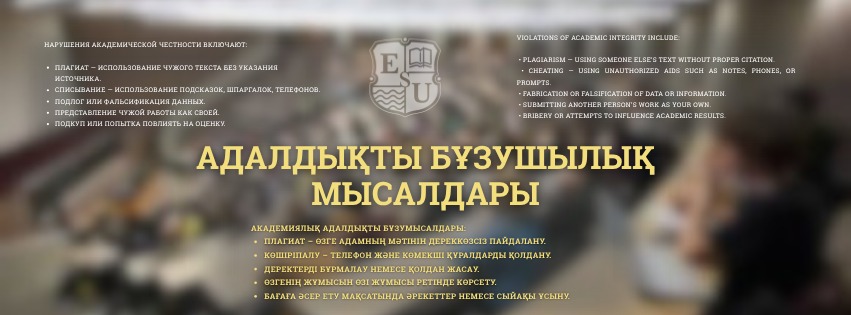
Types of violations

Violations of academic integrity listed in the Rules (П EsU 14-15, cl. 5.2-5.3); the list is not exhaustive (cl. 5.8).

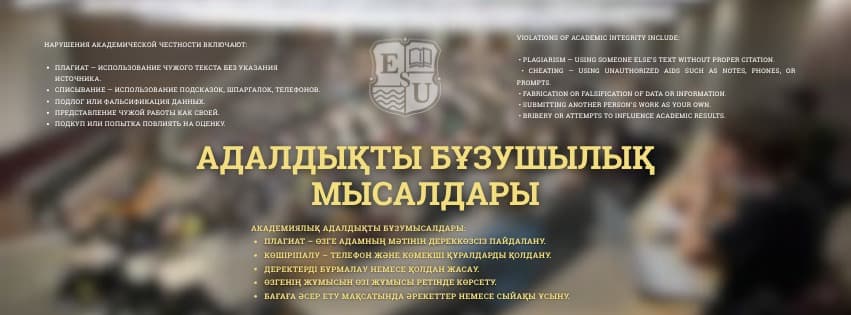
  • In written work: plagiarism, self-plagiarism, duplicate submission, improper paraphrase, buying and selling ready-made work, passing off another person’s or an AI’s text as one’s own.
  • During assessment: cheating and prohibited devices, exchanging information, sitting an exam for another student, disrupting an exam, covert audio, video or photo recording of tasks.

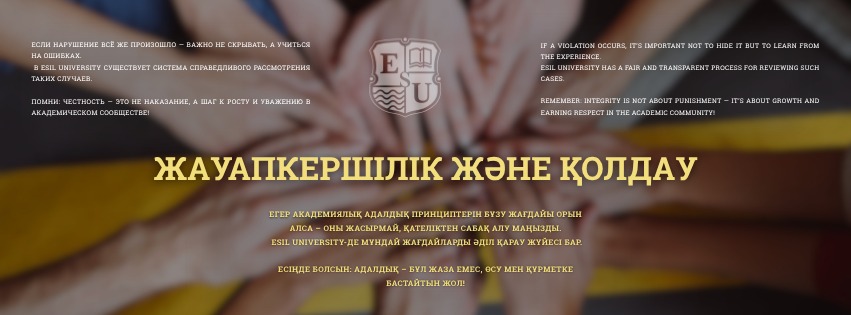
Encountered a violation? Contact the Committee

Any participant in the academic process may submit a report of a possible violation in written or electronic form. The Academic Integrity and Ethics Committee reviews reports within 15 working days of registration (П EsU 14-31, section 8).

Submit a reportUniversity contacts