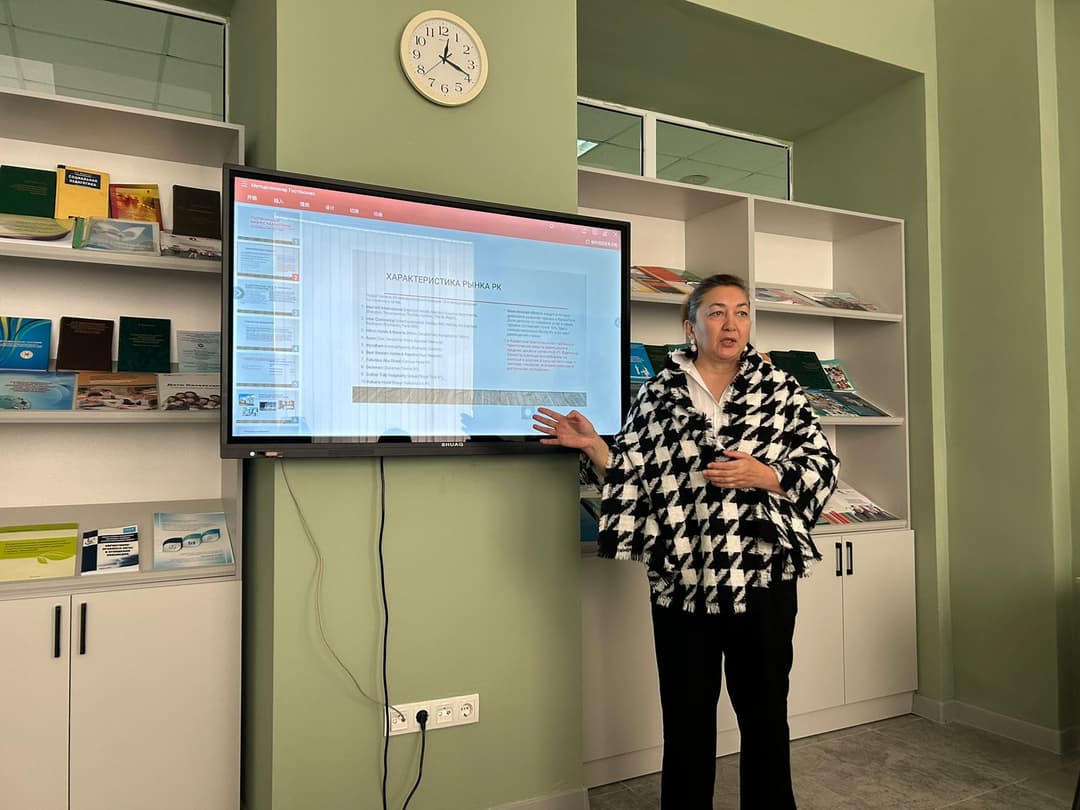
A training session for the academic and teaching staff was held at Esil University within the framework of the series of methodological seminars entitled "School of the Young Instructor." The theme of the event was "The Hotel Business of the Republic of Kazakhstan: Trends and Prospects." The training was conducted by Almas Muzatovna Baydinova, Candidate of Economic Sciences and Associate Professor of the Department of Social Work and Tourism.
The purpose of the training The event was aimed at familiarising faculty members with contemporary trends in the development of the hotel business in Kazakhstan, as well as with the prospects for its growth in the context of a changing economic and social environment. During the event, Almas Muzatovna Bayandikova covered key issues related to new requirements for hotel enterprises, the development of domestic tourism, improvements in service quality, and the implementation of digital technologies in hotel management.
Main Topics of the Training:
1. Current trends in the hotel business in Kazakhstan. The presenter noted that in recent years, the hotel sector of the republic has demonstrated steady growth, particularly against the backdrop of expanding domestic tourism and an increasing number of international tourists. It was emphasized that hotels are adapting to new challenges, including the needs of ecotourists, the growing popularity of domestic tourism, and demand for unique experiences.
2. Problems and Challenges in the Industry. Among the key challenges facing Kazakhstan's hotel industry, Baydinova identified a shortage of qualified personnel, a low level of digitalization in hotel operations, and the need for infrastructure modernization. Particular attention was drawn to the quality of service, which, in the opinion of experts, requires further improvement in order to meet international standards.
3. Growth and Development Prospects. In the future, Kazakhstan's hotel industry will develop in the direction of sustainable growth, a focus on digital technologies, and the deepening of engagement with international tourism networks. It was emphasized that the development of tourism and the hotel industry has a positive impact on regional economies, contributing to job creation and infrastructure development.
Practical benefits for faculty members:
Baiadinova Almas Muzatovna paid particular attention to the integration of contemporary trends in the hospitality industry into university curricula. Specific approaches were proposed for training students in the skills required for a successful career in the hospitality industry. The instructors discussed teaching methods with an emphasis on developing professional competencies such as service management, strategic marketing in the hotel business, and the use of digital solutions to enhance service quality.
Participant Feedback :
The instructors noted the high quality of the training and the relevance of the topics covered. The event not only broadened their knowledge of the hospitality business but also provided an opportunity to discuss practical teaching issues with colleagues. Many participants emphasised that such training sessions help them better understand the current state of the market and prepare students for real-world challenges in the professional environment.