The programme of the Esil University delegation's visit was entirely devoted to research work on two projects. The first half of the day was conducted within the framework of Project IRN AP26104777, "Systemic Effects of Quasi-State Sector Reform: Towards a New Model of Public Administration in Kazakhstan."
The day commenced with a working session with the deans of the faculties of public administration, economics and business, and engineering and digital technologies. The faculty heads presented their educational programmes, ongoing research directions, and strategic approaches to the development of university science. The discussion identified broad opportunities for academic cooperation — primarily in the areas of public sector reform, digital transformation of governance, improving the efficiency of quasi-governmental institutions, and enhancing accountability systems.
Subsequently, a thematic seminar was held on the topic "Quasi-State Sector: International Models and Structural Changes." Indonesian scholars presented their experience of regulating state-owned companies and holdings, discussing mechanisms for audit, accountability, and the integration of digital tools into government structures. Esil University staff, in turn, presented preliminary analytical positions on the reform of Kazakhstan's quasi-state sector, emphasising the importance of international comparisons and the exchange of practices.
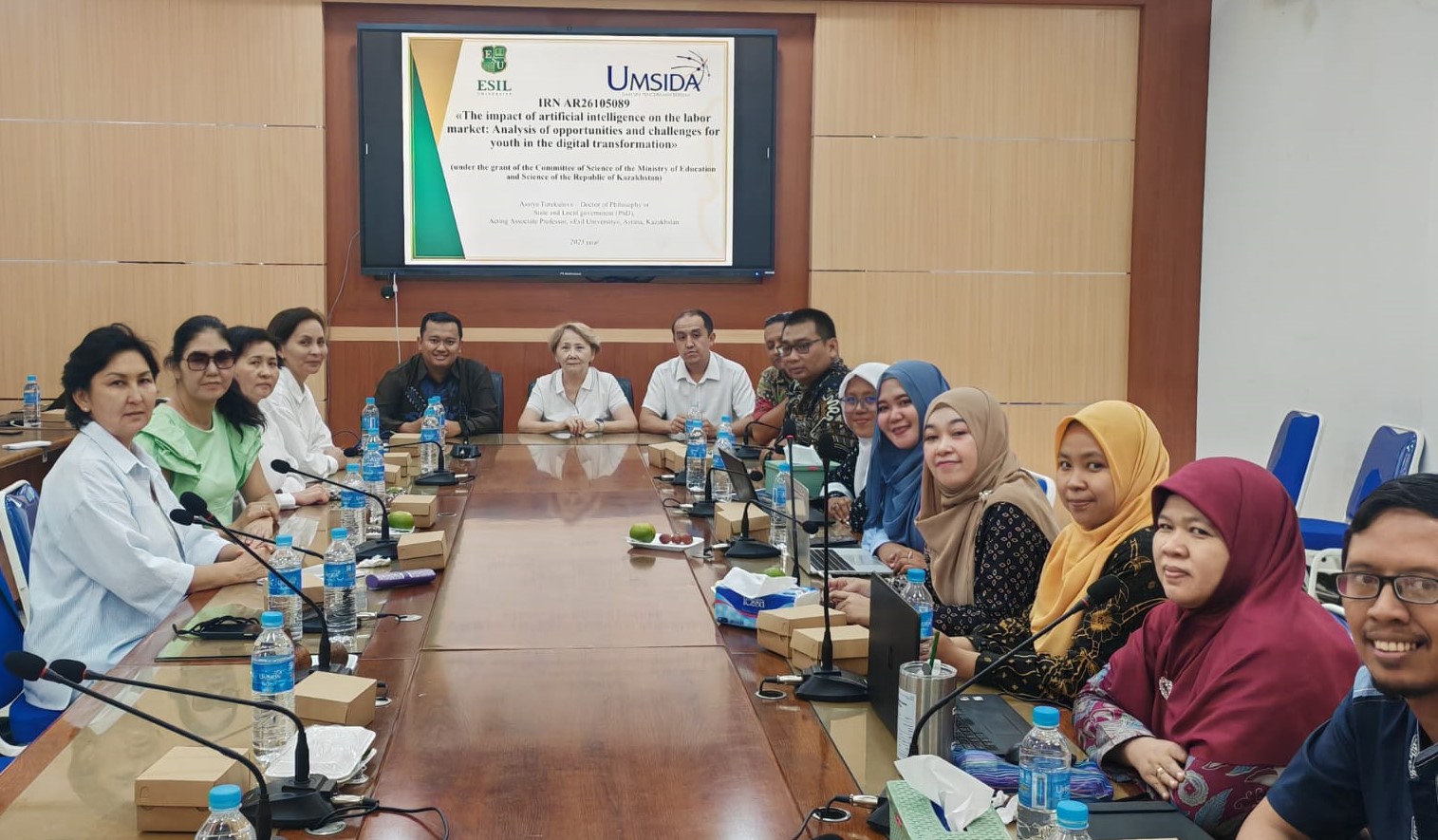
The second half of the day was devoted to work on project AP26105089 "The Impact of Artificial Intelligence on the Labour Market: Analysis of Opportunities and Challenges for Youth in the Context of Digital Transformation."
The Esil University delegation delivered a substantive presentation examining the key aspects of the impact of artificial intelligence on the employment of young specialists. Special attention was devoted to global challenges associated with automation, the disappearance of traditional professions, the formation of new career trajectories, and the necessity of developing digital competencies.
The day concluded with a scientific seminar entitled "AI and the Future of Employment: Global Trends and Regional Context." Key aspects of the transformation of labour markets in Asia and Central Asia were discussed, along with the initial comparative observations of Kazakhstan and Indonesia, as well as common ground for future joint research.