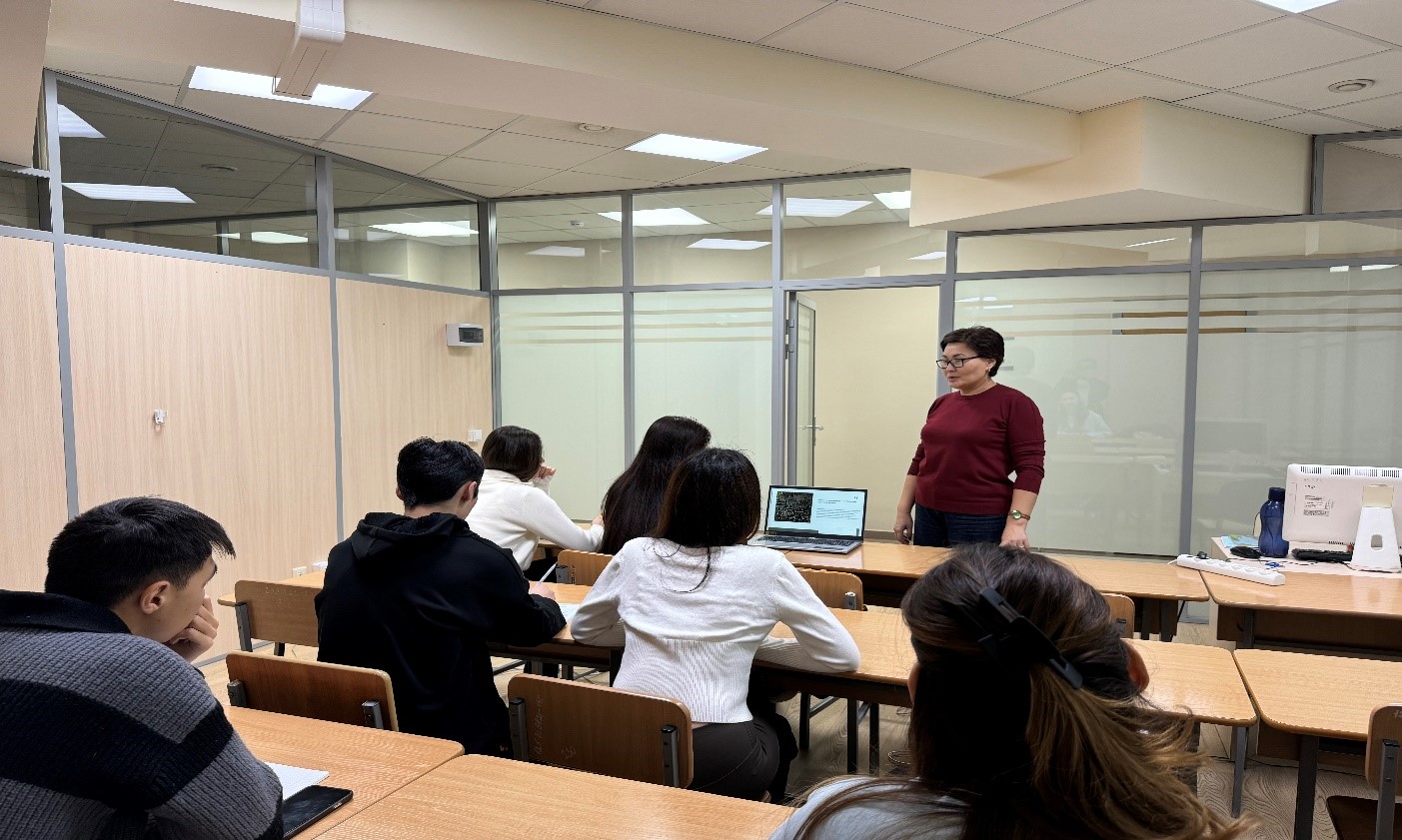
A tutor hour entitled "Rules on Academic Integrity of Students and Employees of Esil University" was conducted at Esil University.
Куратор 1 курса старший преподаватель кафедры «Социальная работа и туризм» Жакупова Гульмира Хамзакызы провела кураторский час на тему «Академическая добросовестность» для групп Б-ӘЖ 25/1 Қ.
During the advisory hour, the principles of academic integrity were examined from the perspective of social work:
1. Integrity — honest work on projects, reports, and research, free from forgery and plagiarism.
2. Accountability — for one's decisions, actions, and presented outcomes.
3. Respect for clients and colleagues — is also reflected in academic activities through respect for others' work.
4. Transparency — open use of data, sources and methodologies.
5. Fairness — equal application of rules for all students and staff members.
Violations of academic integrity and their consequences
- Plagiarism and cheating undermine trust — in social work, trust in the specialist is critically important.
- Falsification of research data or reports may lead to erroneous conclusions and poorly designed social programmes.
- Manipulation of authorship negatively affects reputation both within the academic environment and in the professional sphere.
"In my view as a lecturer, academic dishonesty frequently correlates with future ethical problems in professional practice," notes Gulmira Zhakupova. Therefore, at this stage, the role of the lecturer is as follows:
1. In clarifying the academic integrity rule through examples from social practice.
2. To instil in students the ethical standards applicable both in their studies and in their work with clients.
3. Monitor compliance with rules during the completion of practical assignments, research, and projects.
Practical recommendations were also provided for students:
- Always cite sources and references when preparing reports and projects.
- To work independently and plan time for completing assignments.
- Discuss unclear situations with the instructor.
- To develop critical thinking and self-regulation skills.
At the conclusion of the advisory hour, students defined academic integrity as the foundation of the professional ethics of social workers, and the cultivation of honesty in academic pursuits as the first step towards reliable, professional, and ethical practice. Students must understand that ethical behaviour in their studies directly affects the quality of social work and the trust of clients.