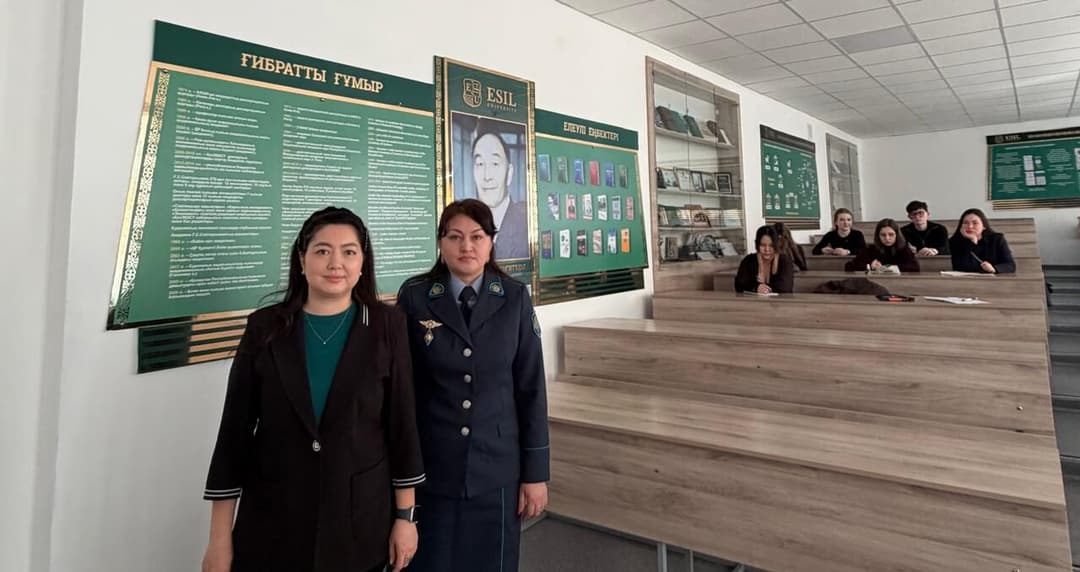
PhD, Acting Associate Professor of the Department of Law Kalmaganbetova D.B., jointly with Alibayeva A.O., a master's student at the Academy of Law Enforcement Agencies under the General Prosecutor's Office of the Republic of Kazakhstan, conducted an informational session for third-year students of the educational programmes "Business and Law" and "Legal Support of Economic Security" on the topic of internet fraud and droppership — current threats of the digital world.
Particular attention at the meeting was devoted to the issue of "dropping." Dropping refers to the provision of one's bank cards, accounts, or access to internet banking to third parties for the transit, encashment, or "laundering" of criminally obtained funds. Victims often agree to this, enticed by the prospect of quick earnings (a percentage of the transfer), without realising that they are becoming accomplices in a crime. Consequences include the blocking of all bank accounts, a damaged credit history, and, in the worst case, criminal liability.