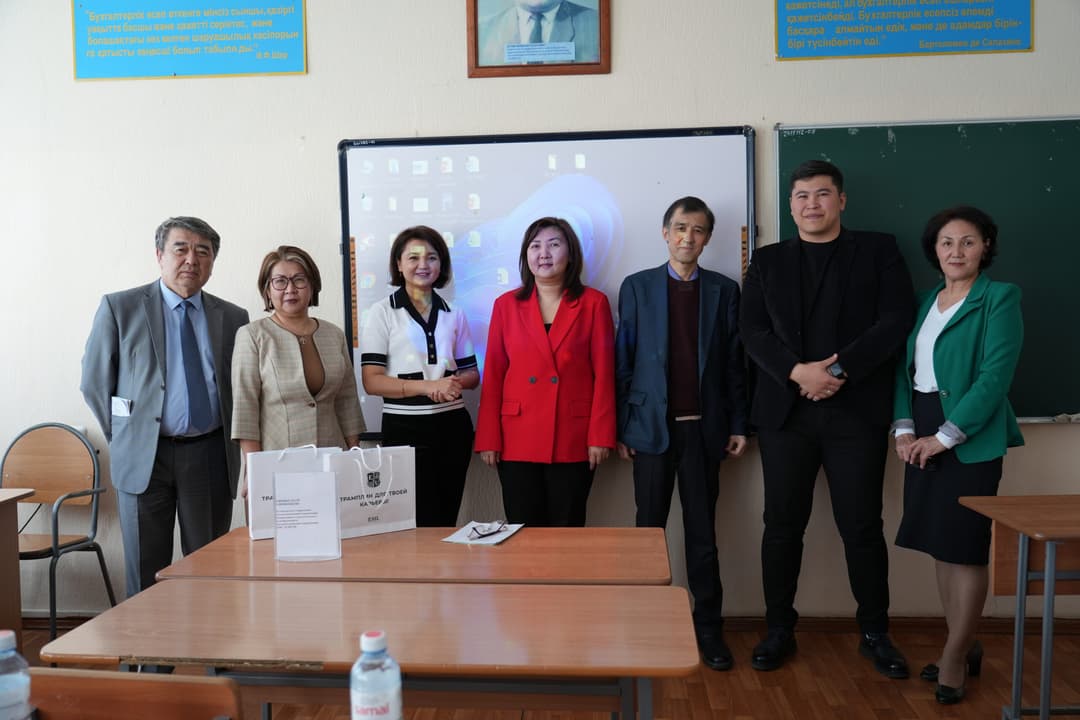
On April 9, as part of the Statistics Week, a round table was organized with the participation of representatives of the Bureau of National Statistics of the Agency for Strategic Planning and Reforms of the Republic of Kazakhstan (BNS ASPiR RK).
The event was aimed at discussing modern approaches to the digitalisation of statistics, the transformation of data collection and analysis processes, and the exchange of best practices in the field of statistical activity.
A report on the topic "Digitalization of the Statistical Service: Modern Technologies and Their Impact on Data Collection Processes" was delivered by Zhaidar Syzdykova, Deputy Director of the Information Technologies Department of the Bureau of National Statistics of the Agency for Strategic Planning and Reforms of the Republic of Kazakhstan, and expert in the field of the e-Statistics information system.
In her address, the speaker outlined the key directions of the digital transformation of the statistical service, including: "the establishment of an institution of data controllers as a mechanism for improving the quality of primary statistical data"; "the development of specialised digital services depending on the level of information detail and user access rights"; "the implementation of tools for the effective dissemination of official statistical information"; "the transformation of internal processes and the development of digital competencies among Bureau staff."
The second speaker at the seminar was Zaure Azimbek, Head of the Methodological Coordination Department of the Strategic Planning and Methodological Coordination Department of the Bureau of National Statistics of the Agency for Strategic Planning and Reforms of the Republic of Kazakhstan. Her report was dedicated to the topic "Transformation of the Bureau of National Statistics in the Context of Digitalization."
Special attention during the seminar was devoted to working with respondents and users of statistical information, the optimization and automation of statistical processes, the transition to medium-term planning, the formulation of state policy in the sphere of data management, and the use of alternative and administrative data sources.
В числе практических примеров Зауре Азимбекқызы привела использование мобильных данных для анализа миграционной и туристической активности, применение данных обязательных пенсионных взносов для трекинга занятости, интеграцию электронных счетов-фактур и фискальных чеков в официальную статистику, использование космического мониторинга для пространственного анализа, а также меры по систематизации и управлению данными с целью повышения достоверности и актуальности статистических показателей.
The seminar generated considerable interest among faculty and students, demonstrating a high level of integration of digital technologies into the state statistics system.